World Health Organization (WHO)
World Health Organization (WHO): The Complete Exam-Ready Guide for 2026
Everything an Indian competitive-exam aspirant actually needs to know about the WHO — facts, frequently confused points, and exam-pattern analysis from a teaching coach's lens.
If you have flipped through a UPSC Prelims paper, an SSC CGL Tier-I, or any banking GA section in the last decade, you have almost certainly encountered the World Health Organization. It is one of those "evergreen" GK topics — examiners love it because it links to history, geography, current affairs and even ethics. But here is what most aspirants miss: the WHO syllabus is changing fast in 2026. The United States has officially withdrawn, membership numbers have shifted, and a new Director-General election is on the horizon. Outdated coaching notes will hurt your score. This guide is built to fix that.
What Exactly Is the WHO?
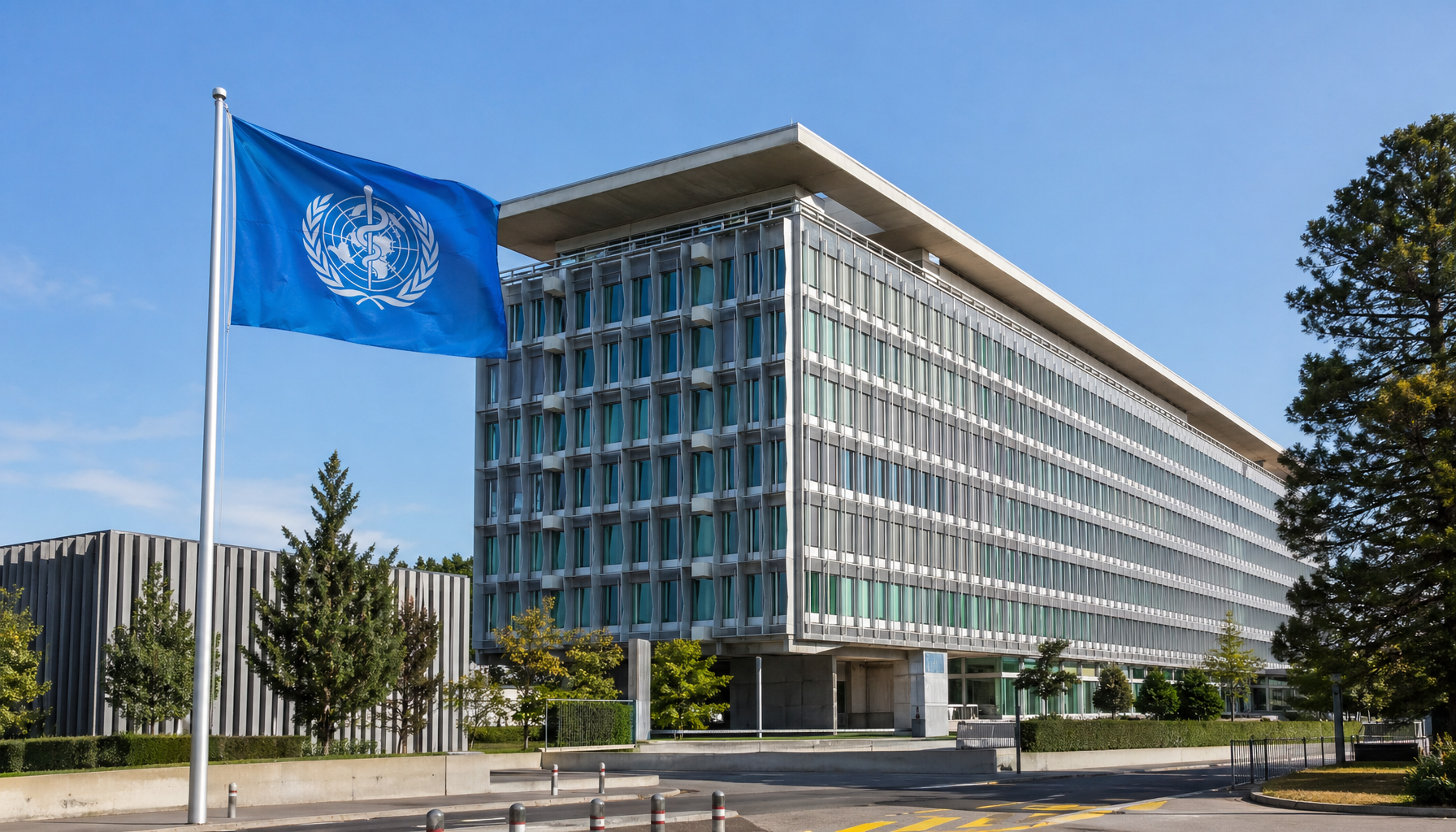
The World Health Organization is the United Nations' specialized agency for international public health. It was born on 7 April 1948 — the day the WHO Constitution was ratified by the 26th member state — and that anniversary is now celebrated worldwide as World Health Day. The WHO inherited the mantle of the older Health Organization of the League of Nations, which is one reason its headquarters sits in Geneva, Switzerland.
A question many students never think to ask — but examiners increasingly do. Geneva was chosen for three deeply historical reasons:
- Swiss neutrality: Switzerland's permanent neutrality made it a natural hub for international bodies during and after the world wars.
- League of Nations legacy: Geneva already hosted the League of Nations and its Health Organization. The WHO essentially absorbed an existing physical and bureaucratic infrastructure.
- UN deconcentration policy: The UN deliberately spreads its agencies — political bodies in New York, health in Geneva, food (FAO) in Rome, education (UNESCO) in Paris.
The WHO flag features the Rod of Asclepius — the snake-entwined staff associated with the Greek god of healing. Aspirants frequently confuse this with the Caduceus (which has two snakes and wings); the Rod of Asclepius has only one snake and is the legitimate medical symbol. ⚠️ Trick question alert: many MCQs test this exact confusion.
Pandit Jawaharlal Nehru Important National and International Days and Dates is among the world leaders credited with proposing an international health body in the post-war reconstruction debates. India was one of the founding signatories of the WHO Constitution in 1946 and has hosted the WHO South-East Asia Regional Office (SEARO) in New Delhi ever since the regional system was set up. This is a high-yield fact for State PSC exams. [VERIFY: exact date of India's signature on WHO Constitution — Ministry of Health & Family Welfare records.]
Leadership: Who Runs the WHO?
The chief executive of the WHO is the Director-General (DG), elected by the World Health Assembly (WHA). The term is five years, renewable once — so a maximum of two terms.
Many older study materials and PDFs floating online still list Margaret Chan as the Director-General. This is outdated. Margaret Chan's term ended in 2017. The current Director-General is Dr Tedros Adhanom Ghebreyesus of Ethiopia, who took office on 1 July 2017 and was re-elected in May 2022 for a second and final term that ends in August 2027. He is the first African DG and the first non-physician to hold the post. [Status as of April 2026 — verify before exam.]
- Questions on the WHO DG have appeared in SSC CGL, RRB, and various banking exams in the years following major DG elections (2006, 2017, 2022). [VERIFY: specific past paper years and question numbers.]
- UPSC tends to test the WHO indirectly — through current-affairs hooks like a public health emergency declaration or a major report (e.g., the World Health Report). [VERIFY: UPSC Prelims question references.]
- State PSCs (especially BPSC, MPSC, UPPSC) frequently ask about regional office headquarters — particularly the SEARO in New Delhi.
Membership: The Numbers Have Changed in 2025–26
This is one of the most updated sections of WHO knowledge — and old coaching notes will lose you marks. As of March 2026, the WHO has 192 full member states. Two recent withdrawals have changed the count from the long-standing figure of 194:
| Membership Category | Status / Examples |
|---|---|
| Full Members | 192 states — all UN members except the USA (withdrawn 22 Jan 2026), Argentina (withdrawn 17 Mar 2026) and Liechtenstein, plus the Cook Islands and Niue (non-UN members) |
| Associate Members | 2 — Puerto Rico and Tokelau |
| Observers | Palestine (national liberation movement), Holy See, Sovereign Military Order of First in World (Male and Female) Malta. Taiwan attended as "Chinese Taipei" from 2009–2016. |
| Recent Withdrawals | USA (effective 22 January 2026) — first member state in WHO history to formally withdraw. Argentina followed (effective 17 March 2026). |
"Which country became the first member state in WHO's history to formally withdraw from the organization?" — Expect this in SSC, banking, and state PSC current-affairs sections through 2027. Answer: United States of America (notice given 20 January 2025 by President Donald Trump; withdrawal effective 22 January 2026).
The 6 Regional Offices: Memorize These Cold
If you study only one section of this article, make it this one. The six regional office HQs are tested mercilessly across exams. Each office has remarkable autonomy — its Regional Director is elected by the Regional Committee for a once-renewable five-year term and merely confirmed (almost never rejected) by the WHO Executive Board in Geneva.
| # | Region | Acronym | Headquarters | Country |
|---|---|---|---|---|
| 1 | Africa | AFRO | Brazzaville | Republic of the Congo |
| 2 | Americas | PAHO/AMRO | Washington, D.C. | USA |
| 3 | South-East Asia | SEARO | New Delhi | India |
| 4 | Europe | EURO | Copenhagen | Denmark |
| 5 | Eastern Mediterranean | EMRO | Cairo | Egypt |
| 6 | Western Pacific | WPRO | Manila | Philippines |
Memorize the headquarters cities in alphabetical order of the regions:
Africa → Brazzaville
Americas → Washington
Eastern Med → Cairo
Europe → Copenhagen
South-East Asia → New Delhi
Western Pacific → Manila
Trick: Remember "BWCCNM" — "Big White Cats Climb New Mountains" — for Brazzaville, Washington, Cairo, Copenhagen, New Delhi, Manila.
Core Functions: What the WHO Actually Does
Disease Outbreak Coordination
Leads global response to infectious diseases — SARS, H1N1, Ebola, COVID-19, mpox. The WHO declares Public Health Emergencies of International Concern (PHEIC) under the International Health Regulations (2005).
Vaccine & Drug Distribution
Runs the Expanded Programme on Immunization (EPI) since 1974. Supports development and equitable distribution of vaccines, diagnostics, and essential medicines.
Disease Eradication
Declared smallpox eradicated in 1980 — the only human disease ever eliminated by deliberate effort. Currently leads polio and guinea-worm eradication drives.
Standard Setting
Publishes the International Classification of Diseases (ICD), Model List of Essential Medicines, and the Framework Convention on Tobacco Control (FCTC, 2003) — WHO's first treaty.
Universal Health Coverage
Champion of UHC under the "Health for All" banner — links directly to SDG-3 (Good Health and Well-Being) and the Astana Declaration on International Organizations Primary Health Care (2018).
Research & Publication
Publishes the flagship World Health Report, Bulletin of the WHO, and houses the International Agency for Research on Cancer (IARC) in Lyon, France.
How This Connects to Other GK Topics
One of the secrets to scoring on competitive exams is recognizing how a single topic loops into others. The WHO links into your syllabus in surprising ways:
- UN System (Polity/IR): WHO is one of 15 UN specialized agencies. Compare it with FAO (Rome), UNESCO (Paris), ILO (Geneva), and IMF/World Bank (Washington). Examiners love HQ-pairing questions.
- SDGs (Environment & Ecology): WHO is the lead agency on SDG-3. It also contributes to SDG-2 (nutrition), SDG-6 (water and sanitation), and SDG-13 (climate change and health).
- Indian Government Schemes: Ayushman Bharat, Mission Indradhanush, and the National Tuberculosis Elimination Programme all align with WHO frameworks. PIB releases on these often cite WHO targets.
- Modern History: The WHO inherited the League of Nations Health Organization — a useful link for general-studies essays on the inter-war years.
- Current Affairs: The 2025 Pandemic Agreement, the 2026 US withdrawal, and the upcoming 2027 DG election are all live exam fodder.
WHO vs UNICEF vs World Bank's Health Work: Don't Mix Them Up
| Feature | WHO | UNICEF | World Bank (Health) |
|---|---|---|---|
| Established | 7 April 1948 | 11 December 1946 | 1944 (Bretton Woods) |
| Headquarters | Geneva, Switzerland | New York, USA | Washington, D.C., USA |
| Primary Focus | Setting global health norms; outbreak response | Children's welfare, immunization, nutrition | Financing health-system reforms |
| Mode of Action | Technical guidance, treaties, declarations | Field operations, supplies, advocacy | Loans, grants, policy advice |
| Head Designation | Director-General | Executive Director | President |
Almost every batch I have taught makes this mistake.
- WHO (World Health Organization): the agency itself — its Secretariat, staff, and Director-General. Permanent body.
- WHA (World Health Assembly): the supreme decision-making body of the WHO, made up of delegations from all 192 member states. It meets in Geneva every May to set policy and approve the budget.
Think of it as the difference between a parliament (WHA) and the country it governs (WHO). The WHA elects the WHO's Director-General. If a question asks "Which body elects the WHO Director-General?" the answer is WHA — not the Executive Board, which only nominates candidates.
WHO Timeline: 6 Dates That Examiners Love
WHO Constitution comes into force on 7 April 1948 after ratification by the 26th member state. The day is now World Health Day.
Launched to ensure Public Sector Undertakings In India all children worldwide receive vaccines against six killer diseases. India's Universal Immunization Programme (1985) is built on this framework.
Declared eradicated by the 33rd World Health Assembly — the first and still only human disease eliminated by human effort.
WHO's first international treaty under Article 19 of its Constitution. India ratified it in 2004.
DG Tedros declared COVID-19 a pandemic on 11 March 2020. The response has shaped every subsequent reform of the WHO.
USA's withdrawal becomes effective on 22 January 2026 — first such departure in WHO history. Argentina follows on 17 March 2026.
5 Most Likely Exam Questions on WHO (with Answer Keys)
Q1. Where is the headquarters of the WHO Regional Office for South-East Asia located?
Ans: New Delhi, India.
Q2. Which was the first disease declared eradicated by WHO?
Ans: Smallpox (1980).
Q3. Who is the present Director-General of the WHO? (as of 2026)
Ans: Dr Tedros Adhanom Ghebreyesus (Ethiopia). His second and final term ends in August 2027.
Q4. Which country was the first to formally withdraw from the WHO?
Ans: The United States of America (effective 22 January 2026).
Q5. The Rod of Asclepius, depicted on the WHO flag, has how many snakes?
Ans: One. (The Caduceus has two — that is a different symbol.)
In objective papers, WHO questions are usually static-fact based (HQ, founding year, regional offices) — these are 1-mark, no-negative-risk questions. Attempt them in your first pass. Save current-affairs questions on WHO (e.g., "latest PHEIC declared by WHO") for the second round, after eliminating obvious wrong options. Always check whether the question says "headquarters" (Geneva for WHO itself) versus "regional headquarters" (one of six cities) — examiners love this trap.
🎯 Key Takeaways
- WHO was established on 7 April 1948; HQ is Geneva; flag bears the Rod of Asclepius.
- Current DG is Dr Tedros Adhanom Ghebreyesus; his term ends in August 2027.
- Membership is now 192 after the USA (Jan 2026) and Argentina (Mar 2026) withdrew.
- Six regional offices: Brazzaville, Washington, Cairo, Copenhagen, New Delhi, Manila.
- Smallpox eradication (1980) is the WHO's signature historical achievement.
- Don't confuse WHO (the agency) with WHA (the assembly that governs it).
- Always cross-check current-affairs facts (DG, member count, recent declarations) against PIB and WHO official site before exam day.
Sources & Further Reading
- World Health Organization — Official site: https://www.who.int/about — Constitution, member states list, governance structure.
- WHO Constitution (full text): https://www.who.int/about/governance/constitution — refer to Articles 1–4 for purpose and membership.
- WHO Director-General Election page: https://www.who.int/about/governance/election — official process and timeline.
- Ministry of Health & Family Welfare, Government of India: https://mohfw.gov.in — for India-WHO cooperation, SEARO updates.
- Press Information Bureau (PIB): https://pib.gov.in — official Indian releases on WHO declarations and Indian appointments.
- WHO South-East Asia Regional Office (SEARO): https://www.who.int/southeastasia
- World Health Report archives: https://www.who.int/publications/world-health-report
This article is part of the generalknowledge.in international organizations series. Facts on leadership, member count, and ongoing reforms are time-sensitive — always cross-verify with official WHO and PIB releases within 30 days of your exam. Editorial review by [Name to be filled by editor]. Last factual verification: 28 April 2026.